The list is copied from a template
The company inherits someone else's control logic. The agreement looks standard, but the reserved list does not match the actual risk points in this company.

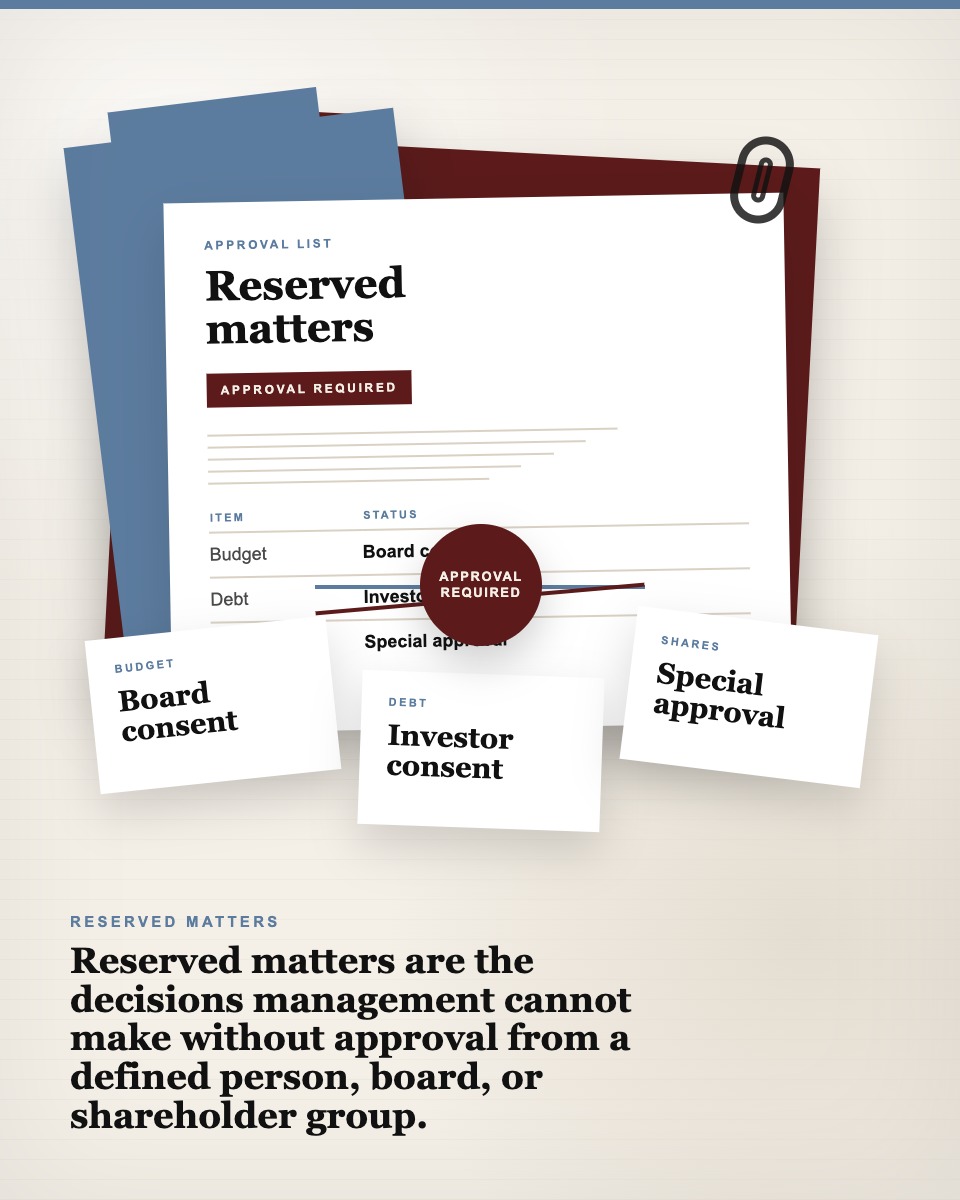
Reserved matters are the decisions management cannot make without approval from a defined person, board, or shareholder group.
Plain definition
Reserved matters usually sit inside a shareholders agreement, investment agreement, operating agreement, or board framework. They name the decisions that require a special approval before management can act.
The list often covers issuing shares, taking debt, selling assets, changing the budget, hiring senior executives, approving acquisitions, dividends, or selling the company. Every item on the list moves a decision out of ordinary management authority.
Reserved matters are the boundary line between operating authority and shared control.
What goes wrong
The company inherits someone else's control logic. The agreement looks standard, but the reserved list does not match the actual risk points in this company.
A budget adjustment, hire, or market move needs formal consent. The team starts managing the approval path instead of the operating problem.
Everyone protects share issuances and debt. Nobody protects related-party transactions, senior hires, or new-market bets. The real conflict arrives through the omission.
The right sits quietly until pressure rises. Then one person discovers they can stop the company from moving, and the room changes temperature immediately.
Founder questions
Bigger picture
Consent rights are the approval power that usually sits behind the reserved matters list.
Related structure Decision RightsDecision rights show where management authority remains and where it has been moved.
Related structure Capital Raise That Cost ControlThis case pattern shows how a funding round can quietly redraw the approval map.
Related reading
The baseline guide for how decision rights, approvals, and authority should scale.
Related readingThe related question of when oversight changes the operating rhythm.
Related readingA case pattern on how protective language can become operating control.
Bring the document, the decision it is blocking, and the people whose authority is unclear.