Dilution arrives as paperwork
The round is described as growth capital. The ownership math changes the control picture. The right to participate was the real protection.

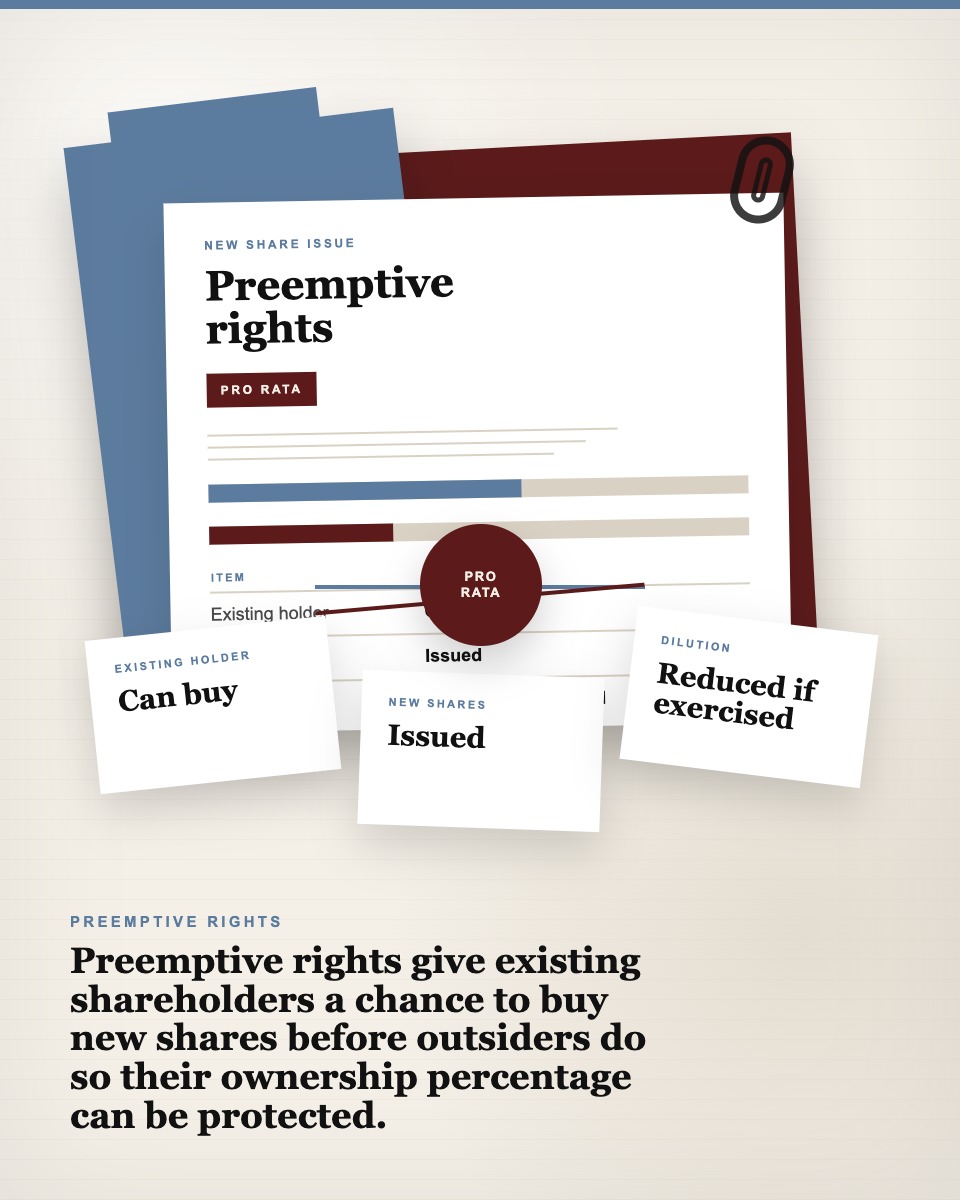
Preemptive rights give existing shareholders a chance to buy new shares before outsiders do so their ownership percentage can be protected.
Plain definition
Preemptive rights usually appear in a charter, shareholder agreement, investment agreement, or financing document. They give existing shareholders the right to participate in a new share issuance before those shares are offered elsewhere.
The point is dilution. If the company issues new shares and an existing holder cannot participate, that holder's percentage can fall. Sometimes that is a financial issue. Sometimes it is a control issue.
Preemptive rights are the shareholder's chance to defend percentage ownership when new shares are issued.
What goes wrong
The round is described as growth capital. The ownership math changes the control picture. The right to participate was the real protection.
A shareholder has the right to maintain their percentage but cannot fund the participation. The protection becomes theoretical under pressure.
Someone signs a waiver because the financing feels urgent. Later they realize they approved the ownership change that reduced their voice.
The company offers participation to some holders and not others. The cap table becomes a map of who was protected and who was diluted.
Founder questions
Bigger picture
Consent rights may control whether new shares can be issued in the first place.
Related structure Reserved MattersNew share issuance often appears as a reserved matter because it changes ownership and control.
Related structure When Should You Raise Capital?Capital timing and dilution should be read together, not separately.
Related reading
The strategic question before any new share issuance.
Related readingThe guide to choosing capital that does not damage control by accident.
Related readingWhy ownership math and capital choices belong in the same conversation.
Bring the document, the decision it is blocking, and the people whose authority is unclear.