The richer owner controls the weapon
The clause looks symmetrical on paper. In the room, one owner can finance the buyout and the other cannot. Fair wording produces uneven pressure.

A shotgun clause lets one owner name a price, then forces the other owner to either buy at that price or sell at that price.
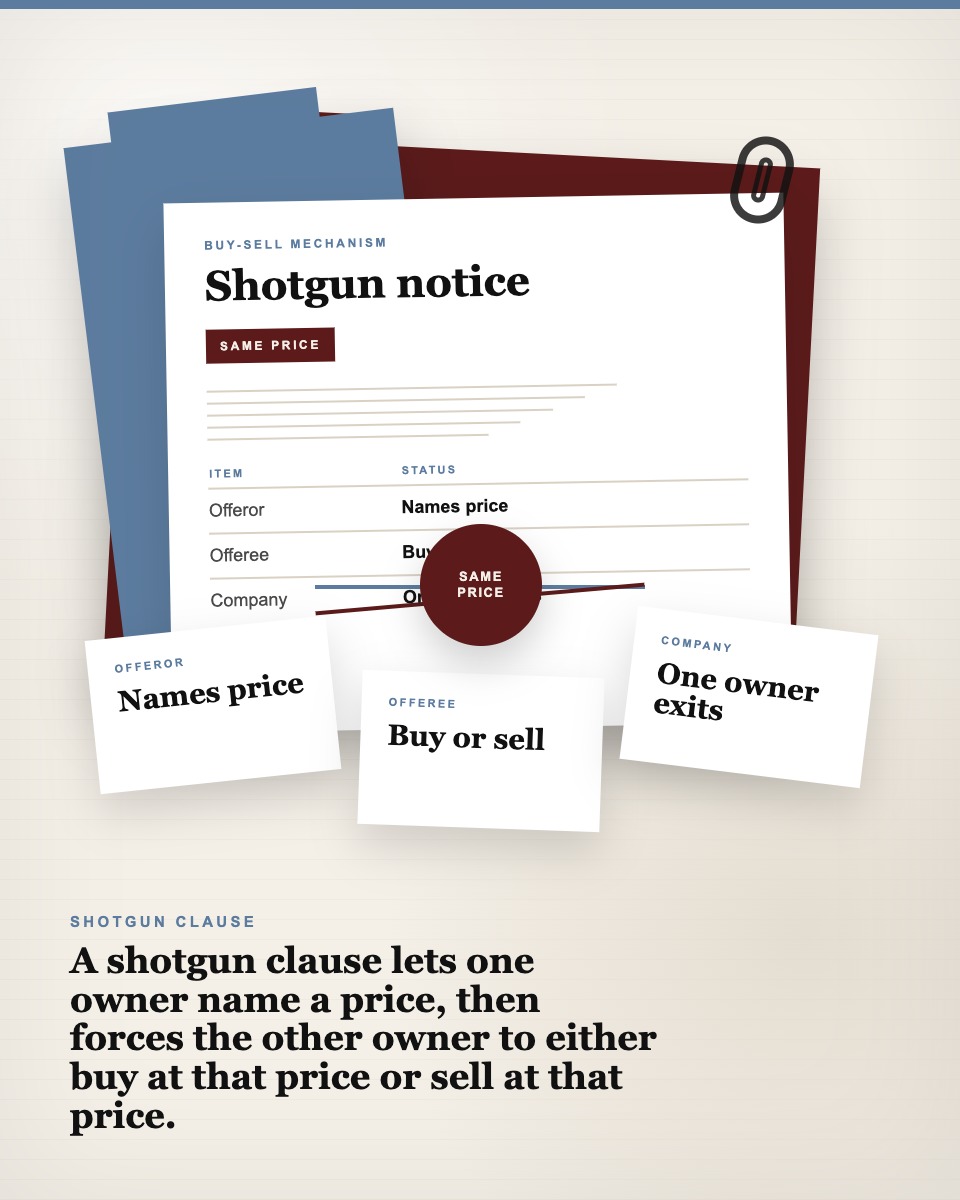
Plain definition
A shotgun clause is a buy-sell mechanism used in shareholder agreements, partnership agreements, and operating agreements. It is usually designed for situations where owners are stuck and one of them needs a path out.
The basic structure is simple. One owner names a price for the shares. The other owner must choose whether to sell their shares at that price or buy the initiating owner's shares at that same price.
A shotgun clause resolves deadlock by forcing ownership separation at a price the initiating owner must be willing to live with.
What goes wrong
The clause looks symmetrical on paper. In the room, one owner can finance the buyout and the other cannot. Fair wording produces uneven pressure.
The initiating owner does not just name value. They name the amount the other side must either accept or fund. Pricing becomes strategy.
The company still has employees, customers, lenders, and deadlines. The clause pulls the ownership fight into the operating calendar.
By the time the clause is used, the relationship may already be too damaged for clean information sharing, fair timing, or disciplined transition.
Founder questions
Bigger picture
A shotgun clause is one mechanism that can sit inside a broader buy-sell agreement.
Related structure Deadlock ClauseShotgun clauses often appear as a deadlock resolution tool when agreement is no longer possible.
Related structure Co-Founders Disagree on DirectionThis guide covers the operating pressure before a forced ownership mechanism appears.
Related reading
How agreement terms behave when the relationship starts to fail.
Related readingThe strategic stage before a clause becomes the only tool left.
Related readingA case pattern on ownership pressure arriving inside a real business.
Bring the document, the decision it is blocking, and the people whose authority is unclear.