The cliff is misunderstood
A founder leaves before the cliff and assumes they still own the same stake. The company discovers the agreement language, expectations, and personal story do not match.

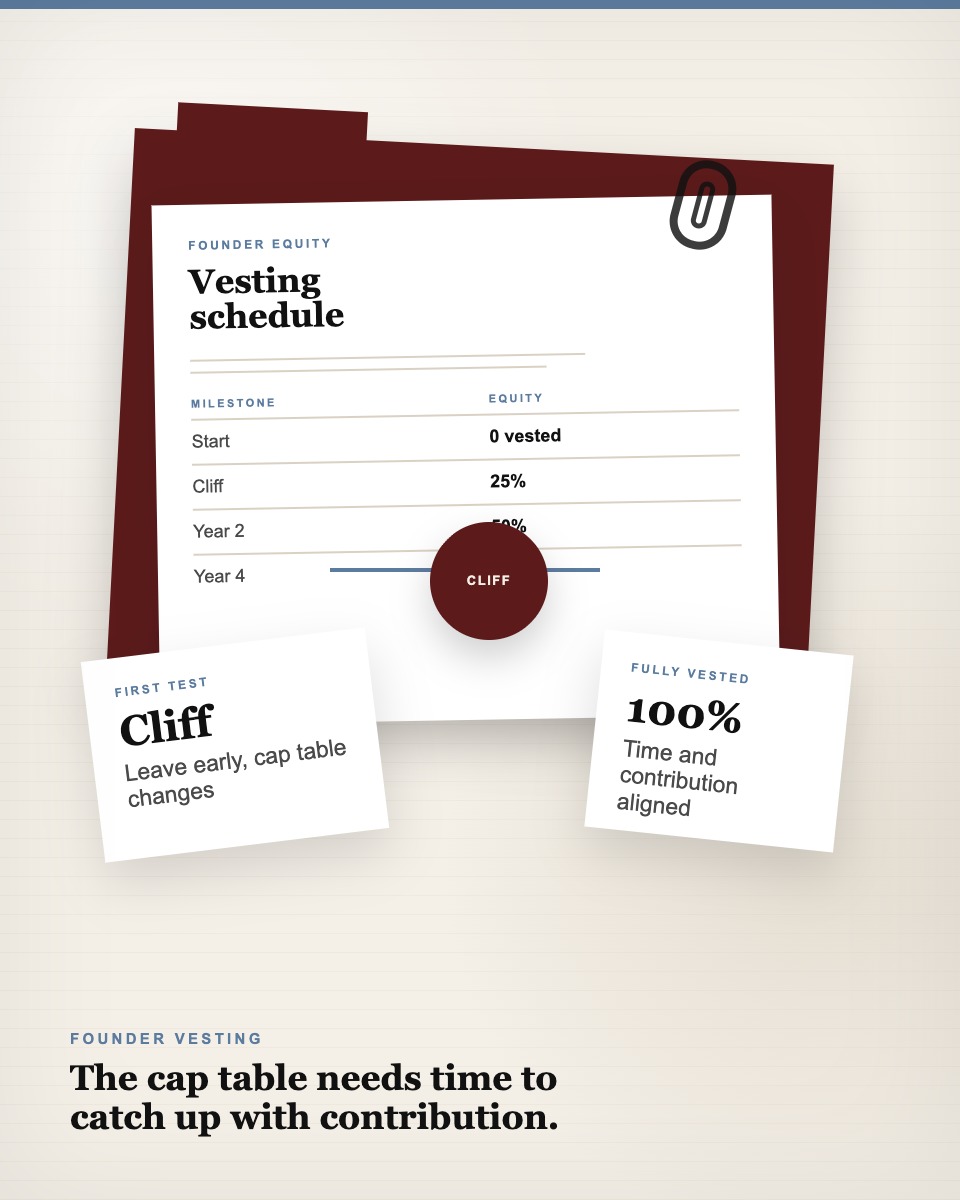
Founder vesting ties founder equity to continued contribution so ownership matches the work still being done.
Plain definition
Founder vesting is the structure that decides when founders fully earn their equity. It usually uses a vesting schedule, a cliff, and rules for what happens if a founder leaves early.
The point is simple: the cap table should reflect commitment, contribution, and time. Without vesting, a founder can leave early and still hold equity that the remaining team must work around for years.
Founder vesting protects the company from a cap table that freezes the first conversation forever.
What goes wrong
A founder leaves before the cliff and assumes they still own the same stake. The company discovers the agreement language, expectations, and personal story do not match.
Two founders split 50/50 on day one. One carries the company for years while the other contribution fades. The cap table keeps pretending nothing changed.
Investors ask why a non-operating founder owns a material stake. The answer becomes a pricing problem.
The remaining founder needs the shares cleaned up. The absent founder knows it. What should have been a schedule becomes a bargaining point.
Founder questions
Bigger picture
Reverse vesting is one common structure used to make founder vesting work after shares are issued upfront.
Related structure Deadlock ClauseDeadlock clauses matter when equal founder ownership turns into equal blocking power.
Related structure How Should Equity Between Founders Be StructuredHow Should Equity Between Founders Be Structured covers the split before vesting tries to protect it.
Related reading
The equity split guide founders should read before the vesting schedule is drafted.
Related readingThe agreement clauses that make founder departure survivable.
Related readingThe later-stage version of the same cap-table problem.
Bring the document, the decision it is blocking, and the people whose authority is unclear.